Newcastle upon Tyne wears its greatest hits on its sleeve — the Tyne Bridge, the Quayside, Grey Street. But the city keeps its most interesting stories tucked away in Victorian tunnels, medieval cloisters, and quiet lanes that even some locals have never explored. This is a guide to the Newcastle that doesn't make the postcards.
The Victoria Tunnel: A City Beneath the City
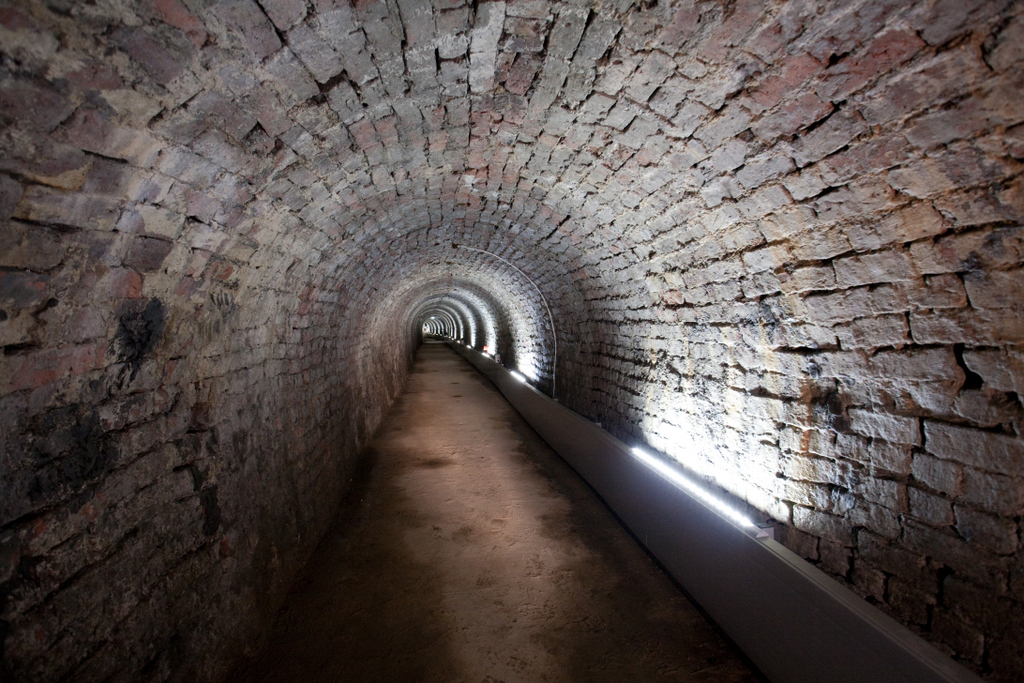
Beneath the streets of the Ouseburn Valley runs a 19th-century wagonway turned Second World War air-raid shelter. The Victoria Tunnel (54.9783, -1.5967) stretches for roughly two and a half miles under the city, built in 1842 to transport coal from Leazes Main Colliery down to the Tyne. During the Blitz, it was hastily converted into a public shelter, and you can still see the original blast walls, first-aid posts, and chemical toilet cubicles.
The Ouseburn Trust runs guided tours from the entrance on Ouse Street, NE1 2PF. Tours last either 75 minutes or 2 hours depending on the route, cost around £14-16 per person, and should be booked in advance — they sell out regularly, especially at weekends. Wear sensible shoes and bring a jumper; it's permanently cool underground. The Saturday morning slots tend to be busiest, so aim for a weekday afternoon if you can.
Blackfriars: England's Oldest Purpose-Built Friary
Most people heading to Chinatown walk straight past one of the most remarkable medieval buildings in the north of England. Blackfriars (54.9710, -1.6190), tucked behind Stowell Street, is a 13th-century Dominican friary — one of the best-preserved medieval friaries in the country. The cloister garden is a genuine pocket of calm in the city centre, enclosed by stone walls that have stood since around 1250.
The complex now houses a restaurant, a craft workshop, and occasional exhibitions. You can wander into the courtyard freely during the day. The restaurant occupying the old refectory serves decent food in an extraordinary setting — vaulted ceilings, stone arches, and eight hundred years of atmosphere. It's at Friars Street, NE1 4XN. Visit during a weekday lunch for the quietest experience; evenings and weekends draw larger crowds.
The Literary and Philosophical Society
The Lit and Phil (54.9693, -1.6160), as everyone calls it, is the largest independent library outside London. Founded in 1793, it was the first building in the world to be lit by an electric light bulb — Joseph Swan demonstrated his invention here in 1879, a full year before Edison's public demonstration in Menlo Park, New Jersey.
The library itself, at 23 Westgate Road, NE1 1SE, is a beautiful, galleried reading room filled with over 200,000 volumes, many of them rare. Non-members can visit during open hours (typically Monday to Friday, 9:30am to 7pm, and Saturday mornings). There's a small but worthwhile programme of evening lectures, concerts, and events. The membership fee is modest — around £50 per year — and gives you borrowing rights and access to one of the finest reading rooms in England. Even if you just pop in for twenty minutes, it's worth seeing.
The Biscuit Factory: Art Without the Attitude
Britain's largest independent commercial art gallery isn't in Shoreditch or Mayfair — it's in a converted Victorian warehouse in Shieldfield. The Biscuit Factory (54.9735, -1.5928) at 16 Stoddart Street, NE2 1AN, spreads across two floors of a former biscuit manufacturer, showing work by over 200 artists at any given time.
What makes it different from most galleries is the range. You'll find affordable prints alongside five-figure sculptures, jewellery next to large-scale canvases, and ceramics alongside photography. It's free to enter and entirely unpretentious. The on-site restaurant, The Factory Kitchen, is good for lunch. The gallery is open Tuesday to Saturday, 10am to 5pm, and on Sundays from 11am. If you're visiting in May or November, the seasonal exhibitions bring in new work across the entire space.
Jesmond Dene: The Wild Heart of the Suburbs
Everyone knows Jesmond as Newcastle's leafy, slightly well-heeled suburb. Fewer people explore the full length of Jesmond Dene (54.9858, -1.5852), the steep, wooded valley that runs from South Gosforth down to the Ouseburn. It was gifted to the city by Lord Armstrong in 1883, and in places it feels less like a city park and more like a Northumbrian gill.
The stretch between Paddy Freeman's Park and Millfield House is particularly good — a proper gorge with waterfalls, old mill ruins, and thick tree cover. Armstrong Bridge (54.9821, -1.5987), a Victorian iron bridge spanning the dene, is worth a detour for the views alone. The free Pets Corner near the northern end is charming for families, though it's the quieter southern stretches where the dene really comes into its own. Early mornings are best, before the dog walkers arrive in force.
The Castle Keep and Black Gate
This sounds like it shouldn't be a hidden gem — Newcastle is literally named after its castle. But the number of visitors and even residents who've never been inside the Castle Keep (54.9690, -1.6118) is remarkable. The Norman keep, built between 1172 and 1177 on the site of the original 'new castle' from 1080, sits wedged between the railway arches in a way that makes it easy to overlook.
The rooftop offers one of the best panoramic views in the city — the Tyne and its bridges laid out below, the Baltic and Sage Gateshead across the water, and the city spreading north. Entry is around £12.50 for adults (annual pass covering both Keep and Black Gate), and the Black Gate, the fortified gatehouse just across the road at Castle Garth, NE1 1RQ, is included in the ticket. The interior exhibitions cover the castle's history from Roman times onwards. Allow about an hour for both buildings.
Ouseburn Valley: Newcastle's Creative Quarter
The Ouseburn (54.9740, -1.5870) has been an open secret for years, but much of it still flies under the radar. This old industrial valley, running down to the Tyne east of the city centre, has become Newcastle's creative district without losing its rough-edged character.
Beyond the well-known venues like the Cumberland Arms and the Cluny, look for the Seven Stories children's literature centre, the 36 Lime Street artists' studios, and the small independent businesses along Stepney Bank and Ford Street. The Tyne Bar (54.9705, -1.5835), right on the riverbank at 1 Maling Street, NE6 1LQ, is one of the best pubs in the city for a summer afternoon pint with views upstream to the bridges. Further up the valley, the allotment gardens and old industrial buildings give the area a character entirely its own.
Sallyport Tower and the Town Walls
Newcastle once had a complete circuit of medieval town walls, and significant sections still survive. The best-preserved stretch runs along the back of Stowell Street, but the real find is Sallyport Tower (54.9725, -1.6095) on Tower Street, NE1 2HJ. This small medieval tower, part of the old defensive walls, occasionally opens for heritage events and offers a glimpse of the fortified city that once stood here.
You can trace a good section of the walls on foot, from Westgate Road down through the Chinatown area to the river. The walk takes about 20 minutes and is far more interesting than it sounds — medieval stonework threading between modern buildings, with information panels along the route.
Heaton Park and the Hidden Waterfall
Heaton Park (54.9825, -1.5745), just east of Jesmond, is a large and undervisited park but sees a fraction of the visitors. The upper park has formal features — bowling greens, tennis courts, and a grand terrace — but follow Jesmond Burn down through the lower park and you'll find a modest but genuinely pretty waterfall hidden in the trees near the Armstrong Bridge end.
The park stretches from Heaton Road down to the Ouseburn, and it's possible to walk from here through Jesmond Dene and on to the river without leaving green space. It's a remarkable corridor of woodland for a city of this size. The stretch between Heaton Park and King John's Palace (a ruined medieval hunting lodge at the park's southern edge) is particularly good on autumn mornings.
St Nicholas Cathedral Lantern Tower
St Nicholas Cathedral (54.9695, -1.6125) sits at the top of the old town, its distinctive lantern tower visible from across the Tyne. But surprisingly few visitors go inside. The 14th-century lantern tower — a crown-like spire that's a rare example of a medieval crown steeple — dominates the skyline, and the interior holds some fine medieval woodwork, a notable brass lectern dating from around 1500, and some excellent stained glass.
The cathedral is free to enter and sits at St Nicholas Churchyard, NE1 1PF. It's open daily, typically from 7am to 6pm. The building is often nearly empty on weekday afternoons — a rare thing for a building of this quality in a city centre. If you're there on a Sunday, evensong is worth attending for the choral music alone.
The Quayside on a Sunday Morning
The Quayside Sunday Market (54.9692, -1.6050) has been running for decades, but the real hidden gem is the Quayside itself at about 7am on a Sunday, before the market traders have fully set up. The light on the river at that hour, the bridges reflected in still water, and the near-total quiet make it a completely different place from the busy Saturday night scene a few hours earlier.
Walk east from the Millennium Bridge along the river towards St Peter's Basin, and you'll leave the crowds behind entirely. The stretch past St Ann's Quay and on towards the old Spillers flour mill is industrial heritage at its most atmospheric. This is the Tyne that photographers love — warehouses, cranes, and wide water.
Leazes Park and the Hidden Terrace
Leazes Park (54.9745, -1.6230) is overshadowed by its neighbour — St James' Park football ground looms above the northern edge. But this is Newcastle's first purpose-built public park, opened in 1873 after a campaign by working men's organisations to create public green space.
The lake is pleasant enough, but the hidden gem within the hidden gem is the raised terrace along the park's southern edge, which gives a surprising and largely unknown view across the Town Moor — 1,000 acres of common land stretching north out of the city. From certain spots along this terrace, you can see nothing but grass and sky, which is a strange and wonderful thing to experience five minutes from the centre of a major city.