Few cities anywhere in Britain can match the sheer density of engineering landmarks packed into the Tyne Gorge and the streets around it. Stand on the Quayside in Newcastle and you can count six bridges in a single glance, each one a product of a different era and a different leap in engineering ambition. Add in a hidden Victorian tunnel, one of Europe's largest timber structures, and a railway station that changed how we think about public architecture, and you have a place that rewards curious visitors like almost nowhere else.
This guide covers ten of the most impressive engineering works in Newcastle and Gateshead, from Georgian stone viaducts to structures that were genuinely world firsts. Most of them are free to visit and many are within easy walking distance of each other along the River Tyne.
Tyne Bridge
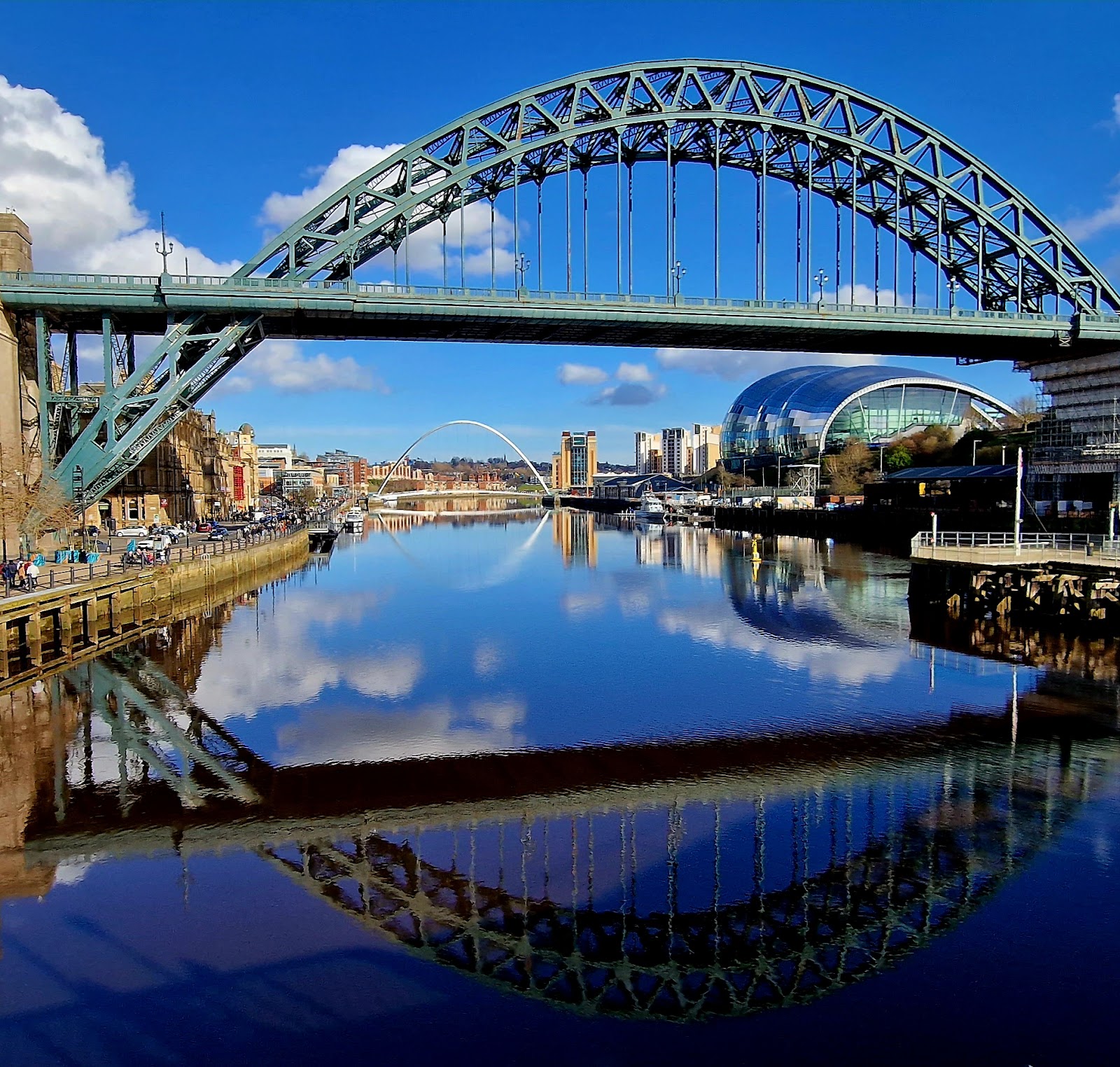
The Tyne Bridge is the undisputed icon of Newcastle, its green steel arch instantly recognisable and deeply embedded in the identity of the city. Designed by the engineering firm Mott, Hay and Anderson and built by Dorman Long of Middlesbrough between 1925 and 1928, the bridge spans 162 metres across the Tyne and rises 59 metres above the river at its highest point. Its through-arch design was actually completed before the Sydney Harbour Bridge, which was also built by Dorman Long, though both designs drew independently on the earlier Hell Gate Bridge in New York.
The bridge is Grade II* listed and carries road traffic between Newcastle and Gateshead. The best views come from the Quayside on either side of the river, or from the deck of the Gateshead Millennium Bridge downstream. Walking across the Tyne Bridge itself is free and takes only a few minutes, though it is the views from below that truly convey its scale. The granite towers at each end originally housed warehouses and are worth a closer look for their Art Deco detailing.
High Level Bridge
If the Tyne Bridge is Newcastle's most famous crossing, the High Level Bridge is arguably its most ingenious. Designed by Robert Stephenson, son of the railway pioneer George Stephenson, and completed between 1847 and 1849, this was the first major combined road and rail bridge in the world. Its pioneering dual-deck design carries railway lines on the upper deck and a road on the lower, a solution that was decades ahead of its time.
The bridge is 425.6 metres long and is Grade I listed, reflecting its enormous significance in the history of civil engineering. You can walk across the lower road deck for free and get a real sense of the cast iron construction above your head. The view of the river and the bridges downstream is superb. Look out for the massive stone piers that support the structure, each one a feat of Victorian masonry.
Gateshead Millennium Bridge
Opened in 2001, the Gateshead Millennium Bridge is the newest of the Tyne crossings and one of the most inventive bridges built anywhere in the world. Designed by Wilkinson Eyre Architects with Gifford as structural engineers, it was the world's first tilting bridge, earning the affectionate nickname the "Blinking Eye" for the way its curved deck and supporting arch rotate as a single piece to allow river traffic to pass beneath.
The bridge spans 126 metres and is a pedestrian and cyclist crossing linking the Quayside on the Newcastle side with the Baltic and the Sage Gateshead on the south bank. Watching the bridge tilt is a genuine spectacle, though lift times vary depending on river traffic. The bridge is free to cross at all times and is beautifully lit at night. Check the Gateshead Council website for scheduled tilt times if you want to see it in action.
Swing Bridge
Sitting right at the historic heart of Newcastle's river crossings, the Swing Bridge occupies the site where the Romans built Pons Aelius nearly two thousand years ago. The current bridge was designed by the industrialist and inventor Lord Armstrong and opened in 1876. Listed at Grade II*, it is hydraulically powered and swings on a central pivot to open a channel for ships, a mechanism that was cutting-edge technology in the Victorian era and remains operational today.
The bridge is 171 metres long and still swings open on occasion for river traffic, though far less frequently than in its industrial heyday. It sits between the Tyne Bridge and the High Level Bridge and is free to walk across. The Armstrong hydraulic machinery is housed in the central pier and is not generally open to the public, but interpretation panels on the bridge explain how it works.
Victoria Tunnel
Beneath the streets of Newcastle lies one of its most remarkable and least expected engineering works. The Victoria Tunnel was built between 1839 and 1842 as a coal waggonway, running 2.4 miles from Spital Tongues in the north of the city down to the banks of the Tyne. Coal wagons descended the tunnel's gradient by gravity, hauled back by a stationary steam engine to reach the river for loading onto ships. During the Second World War, the tunnel was converted into an air raid shelter capable of protecting thousands of people from German bombing raids.
Today, guided tours of the tunnel are run by the Ouseburn Trust and offer a fascinating, atmospheric experience. Tours last between one and a quarter and two hours, depending on the route chosen and take you through restored sections of the tunnel, explaining both its industrial origins and its wartime role. Booking in advance is essential as tours are popular and group sizes are limited. Tickets are reasonably priced at around fourteen to sixteen pounds for adults. Wear warm clothing and sturdy shoes, as the tunnel is cool and the floor can be uneven.
Newcastle Central Station
Newcastle Central Station is not just a working railway hub but one of the finest pieces of Victorian architecture in the North East. Designed by the architect John Dobson and built between 1845 and 1850, the station is Grade I listed and celebrated for its pioneering curved wrought iron train sheds, which span the platforms in three elegant arches. At the time of its construction, the curving roof was a bold structural experiment that influenced station design across the country.
The station is free to enter and you do not need a ticket to appreciate the architecture. Stand on the main concourse and look up at the iron ribs of the roof, which follow the gentle curve of the tracks beneath. The portico on Neville Street is a grand neoclassical frontage that gives little hint of the engineering innovation behind it. Central Station is also the main arrival point for visitors coming to Newcastle by train, so most people will pass through it at some point during their visit.
Ouseburn Viaduct
A short walk east of the city centre, the Ouseburn Viaduct carries the railway high above the valley of the Ouseburn, a small tributary of the Tyne that was once the industrial heart of Newcastle. Designed by John and Benjamin Green and built between 1837 and 1839, the viaduct is 330 metres long and stands 33 metres above the valley floor. Its stone arches are a handsome and imposing sight, particularly when viewed from the Ouseburn Valley below.
The Ouseburn area itself has been regenerated into one of Newcastle's most characterful quarters, with independent galleries, studios, pubs and live music venues clustered beneath the viaduct. The best way to appreciate the structure is to walk along the Ouseburn Valley trail, where you can see the full length of the viaduct from below. The area is free to explore and makes for a rewarding half-day visit combined with places like the Biscuit Factory gallery, the Free Trade Inn, and the Cluny music venue.
Dunston Staiths
A little further west along the Tyne, the Dunston Staiths are one of the most dramatic and atmospheric relics of the North East's industrial past. Built in 1893 for the North Eastern Railway, these timber structures were used for loading coal from rail wagons directly into ships on the river. At 526 metres long, the staiths are the largest timber structure in Europe and are Grade II listed.
The staiths have survived fires and decades of neglect but have been partially restored by a dedicated group of volunteers. They are not always open to the public, but open days and guided walks are held periodically, particularly during Heritage Open Days in September. Even when closed, the staiths are visible from the south bank path and from various points along the Tyne, and their sheer scale is impressive from any angle. Check the Dunston Staiths website or social media for upcoming events.
King Edward VII Bridge
Completed in 1906 to a design by Charles Harrison, the King Edward VII Bridge is the main line railway bridge over the Tyne, carrying the East Coast Main Line between Newcastle and Gateshead. Its four lattice steel spans stretch 350 metres across the river and represent a confident piece of Edwardian engineering that was built to handle the heaviest rail traffic of the day.
The bridge is best viewed from the Quayside or from the deck of the High Level Bridge. While you cannot walk across it, trains pass over it frequently and the sight of an express train crossing the arches with the Tyne below is a fine one. The bridge sits slightly upstream of the High Level Bridge and the two structures together form a striking pair when seen from the east.
Queen Elizabeth II Metro Bridge
The most modern of the major Tyne crossings in terms of heavy infrastructure, the Queen Elizabeth II Metro Bridge was opened in 1981 as part of the Tyne and Wear Metro system. It was the first bridge built specifically to carry a metro system across the Tyne, spanning 360 metres between the stations at Gateshead and Newcastle. The bridge is a concrete and steel structure that carries twin metro tracks and offers passengers some of the best views of the river and its older bridges as trains cross between the two banks.
You can experience the bridge by taking any Metro train between Gateshead and the city centre. A single Metro ticket is inexpensive and the crossing takes less than a minute, but the panoramic view of the Tyne Gorge from the train window is one of the finest in the city. The bridge sits upstream of the Tyne Bridge and the Millennium Bridge.
Planning Your Visit
The majority of these engineering landmarks are concentrated along a stretch of the River Tyne that can be walked in an hour or two. A good route starts at the Quayside on the Newcastle side, crosses the Gateshead Millennium Bridge, walks west along the south bank past the Sage Gateshead, and returns via the Swing Bridge or the High Level Bridge. This loop takes you past or across six of the ten structures listed here.
For the Victoria Tunnel, you will need to book separately with the Ouseburn Trust. The Ouseburn Viaduct is a short bus ride or a twenty-minute walk east of the Quayside. Dunston Staiths are best reached by car or by a riverside walk westward from the centre.
There is no charge to walk across any of the bridges or to admire the station, viaduct and staiths from the outside. The only paid experience is the Victoria Tunnel tour. Parking is available at Quayside car parks, though the area is well served by public transport including the Metro and local bus routes.